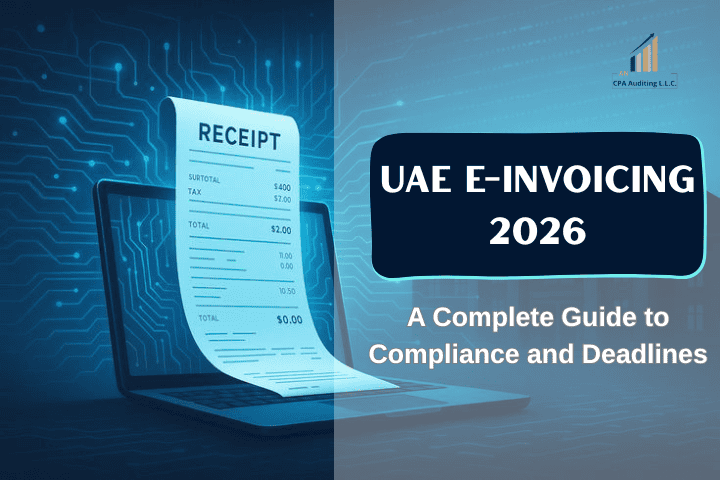
UAE Electronic Invoicing 2026: A Complete Guide to Compliance and Deadlines
The United Arab Emirates is taking a significant leap forward in its digital transformation journey with the introduction of a nationwide Electronic Invoicing System. Aligned with the “We the UAE 2031” vision, this initiative aims to modernize government performance and advance the nation’s digital infrastructure.
For businesses operating in the UAE, understanding these new regulations is crucial for maintaining compliance and avoiding potential penalties.
What is UAE Electronic Invoicing?
Electronic Invoicing (e-Invoicing) is a system for the issuance, transmission, exchange, and sharing of invoice data in a structured, machine-readable XML format. Unlike traditional paper or PDF invoices, these electronic documents enable automatic processing between a supplier’s and a buyer’s accounting systems.
The UAE has adopted the 5-Corner Model for this framework:
Corner 1: The Supplier.
Corner 2: The Supplier’s Accredited Service Provider (ASP).
Corner 3: The Recipient’s (Buyer’s) ASP.
Corner 4: The Recipient (Buyer).
Corner 5: The Federal Tax Authority (FTA).
Who Must Comply?
Electronic Invoicing is mandatory for any Person conducting Business in the UAE, regardless of their VAT registration status, unless specifically excluded (such as certain sovereign activities or exempt financial services). Even if you are not required to register for VAT, you must register with the FTA to obtain a Tax Identification Number (TIN), which serves as your participant identifier.
Key Implementation Dates
The Ministry of Finance has outlined a phased roll-out plan to ensure a smooth transition:
July 1, 2026: Launch of the Pilot Programme and start of the Voluntary Onboarding phase.
January 1, 2027: Mandatory implementation for businesses with annual revenue AED 50,000,000.
July 1, 2027: Mandatory implementation for businesses with annual revenue < AED 50,000,000.
October 1, 2027: Mandatory implementation for all Government Entities.
Benefits of the New System
While compliance is mandatory, the system offers several advantages for the UAE business community:
Increased Efficiency: Reduced processing times compared to paper cycles and faster payment workflows.
Reduced Errors: Standardized formats significantly lower the risk of data entry mistakes and commercial disputes.
Enhanced Transparency: Near real-time data access helps streamline VAT refunds and may eventually pre-populate VAT returns.
Cost Savings: Lower costs associated with paper, printing, and physical archival.
How to Prepare Your Business
To ensure readiness, businesses should follow these essential steps:
Select an Accredited Service Provider (ASP): You must appoint exactly one ASP to handle both sending and receiving invoices.
Onboard via EmaraTax: The onboarding process must be initiated through the FTA’s EmaraTax platform.
Obtain Your Participant ID: Your ID will be “0235” followed by your 10-digit TIN.
System Integration: Work with your ASP to ensure your accounting or ERP software can extract the mandatory data points required for the UAE’s specific “PINT-AE” billing specifications.
Data Retention: Ensure your systems are set up to retain electronic records for at least 5 years (7 years for real estate).
How ANCPA Auditing Can Help Your Business
This is where you add your value — here is a strong, polished version:
✔ Full e‑Invoicing Readiness Assessment
We evaluate your current invoicing, accounting, and ERP systems to identify compliance gaps before the deadlines.
✔ ASP Selection & Integration Support
We guide you in choosing the right Accredited Service Provider and ensure smooth integration with your existing systems.
✔ EmaraTax Onboarding Assistance
We handle the onboarding steps, documentation, and setup to ensure your business is correctly registered and ready.
✔ PINT‑AE Data Mapping & Validation
Our team ensures your invoices meet all mandatory UAE e‑Invoicing data requirements — avoiding rejections or compliance issues.
✔ Staff Training & Implementation Support
We train your finance and accounting teams on the new processes, formats, and compliance obligations.
✔ Ongoing Compliance Monitoring
We provide continuous support to ensure your business remains compliant as the system evolves.
📞 Need Help Preparing for UAE e‑Invoicing?
ANCPA Auditing provides end‑to‑end support to ensure your business is fully compliant before the mandatory deadlines.
Contact us today to get started.
Frequently Asked Questions (FAQs)
What is UAE Electronic Invoicing?
UAE Electronic Invoicing (E-Invoicing) is a digital invoicing system that allows businesses to issue, exchange, and store invoices electronically in a structured format. The initiative is part of the UAE government's digital transformation strategy and aims to improve tax compliance, efficiency, and transparency.
When will UAE Electronic Invoicing become mandatory?
The UAE Ministry of Finance has announced plans to introduce a nationwide e-invoicing framework in phases. Businesses should begin preparing their accounting systems and processes now to ensure compliance when the mandatory implementation dates are officially announced.
Is UAE Electronic Invoicing required for all businesses?
The final scope and implementation phases will be determined by the UAE authorities. However, businesses registered for VAT and those conducting significant commercial activities are expected to be among the entities affected by the new e-invoicing requirements.
What are the benefits of Electronic Invoicing for businesses?
Electronic Invoicing can help businesses reduce manual errors, improve invoice processing speed, enhance record keeping, strengthen compliance with tax regulations, and streamline financial reporting. It also reduces paper usage and administrative costs.
How can businesses prepare for UAE Electronic Invoicing?
Businesses should review their current accounting software, invoicing procedures, and internal controls. It is important to ensure that systems can generate and receive electronic invoices in the formats required by the UAE authorities and integrate with future compliance requirements.
What happens if a business is not prepared for Electronic Invoicing?
Failure to comply with future e-invoicing requirements may result in operational disruptions, delayed invoicing processes, compliance risks, and potential penalties once the framework becomes mandatory. Early preparation can help businesses avoid these challenges.
How can ANCPA Auditing help with UAE Electronic Invoicing?
ANCPA Auditing assists businesses with readiness assessments, accounting system reviews, VAT compliance, process improvements, and implementation support to help organizations prepare for UAE Electronic Invoicing requirements efficiently and confidently.