UAE Audit Requirements 2026 | Free Zone & Mainland Guide
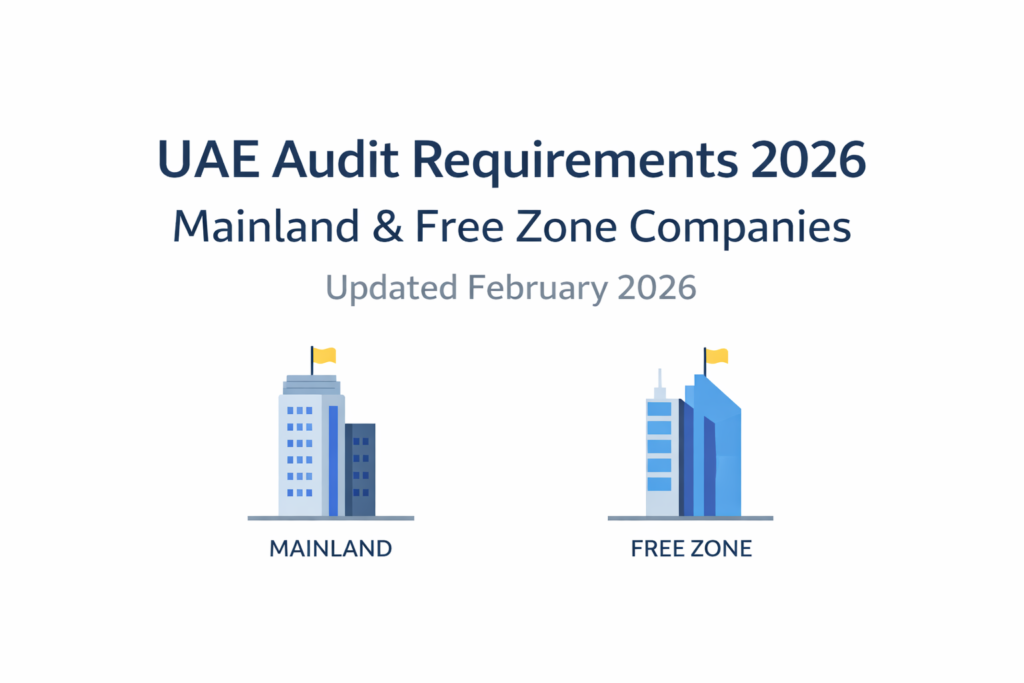
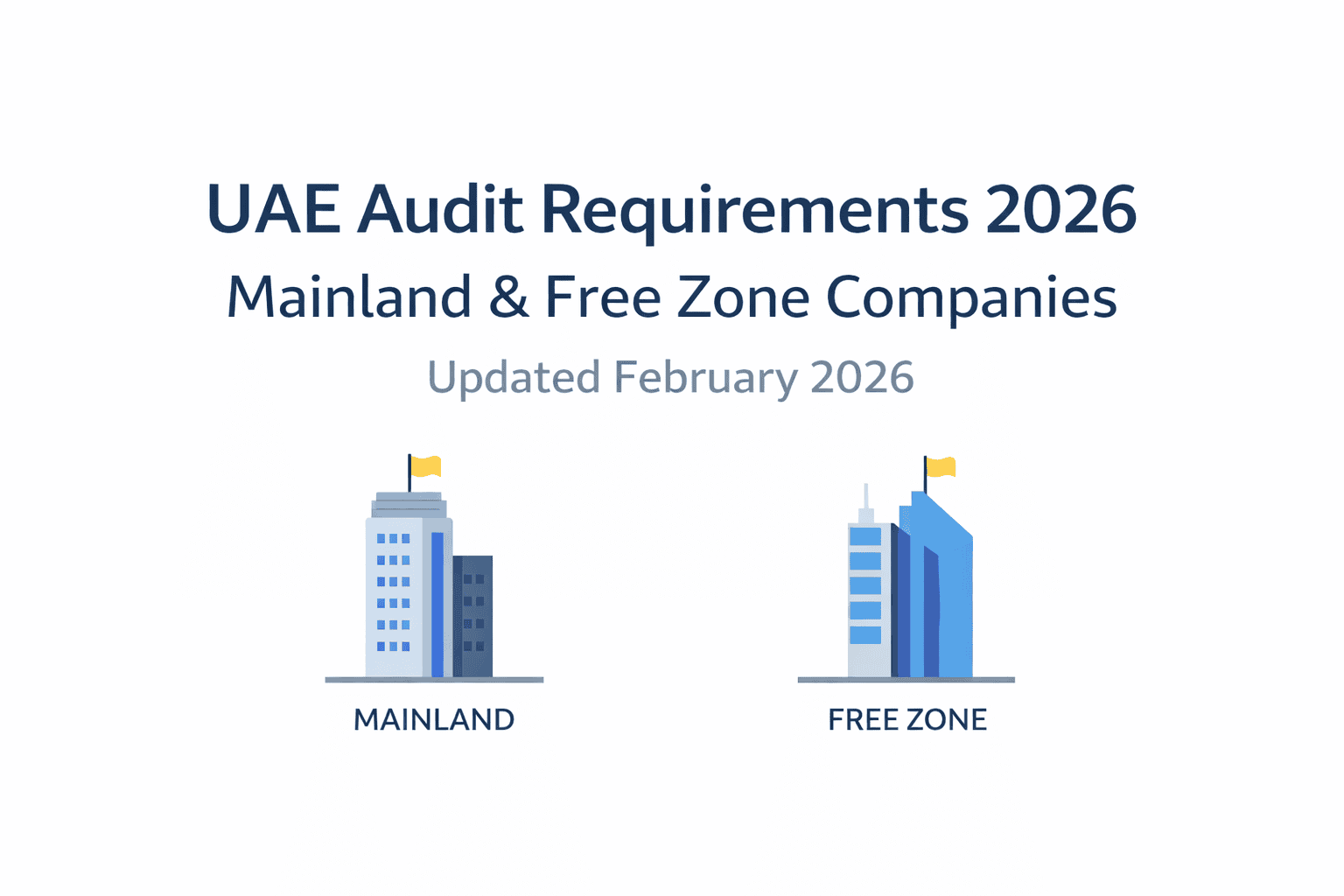
Understanding the audit requirements in the UAE has never been more important than in 2026. With UAE Corporate Tax now fully in force and Free Zone rules tightened, more companies than ever are legally required to prepare audited financial statements. Whether you run a mainland LLC in Dubai or a Free Zone company in DMCC, JAFZA, or DIFC, this guide explains exactly who needs an audit, the deadlines that apply, and the penalties for getting it wrong understand when audits are required, who is exempt, and how to prepare correctly.
This guide explains UAE audit requirements in simple terms for business owners, finance managers, and foreign investors.
Many businesses combine statutory audits with professional accounting services in Dubai to ensure full compliance with UAE regulations.
Who Needs an Audit in the UAE in 2026?
In 2026, an audit is triggered by two main rules: the UAE Corporate Tax Law and your company’s licensing authority.
Under the UAE Corporate Tax Law, audited financial statements are mandatory for:
Any Taxable Person earning revenue above AED 50 million during the relevant tax period, and
Every Qualifying Free Zone Person (QFZP) — regardless of how much revenue they earn.
This is set out in Ministerial Decision No. 84 of 2025, which replaced the earlier Decision No. 82 of 2023 for financial years starting on or after 1 January 2025. The key change for 2026: Qualifying Free Zone Persons can no longer rely on the AED 50 million threshold — if you want to keep your 0% Free Zone tax benefit, audited financial statements are required.
Separately, most licensing authorities (Free Zones and the mainland Department of Economy and Tourism) require audited accounts for license renewal, independent of the tax rules.
Free Zone Audit Requirements (2026)
The biggest change in 2026 affects Free Zone companies. The vast majority of UAE Free Zones now require an annual audited financial statement, and for Qualifying Free Zone Persons it is effectively mandatory for tax purposes regardless of revenue or company size.
Key points for Free Zone companies:
Major Free Zones — including DMCC, JAFZA, DIFC, DAFZA, and Meydan — require audited financial statements for license renewal.
A Qualifying Free Zone Person must maintain audited financial statements to keep the 0% Corporate Tax rate on qualifying income.
Statements must be prepared by a UAE-licensed audit firm and comply with International Financial Reporting Standards (IFRS).
Filing deadlines vary by Free Zone, typically within 3 to 6 months of the financial year-end (for example, DMCC generally requires submission within 180 days).
If your Free Zone company has a 31 December 2025 year-end, you should be planning your 2025 audit now to stay compliant in 2026.
Mainland Audit Requirements (2026)
Mainland companies are governed by the UAE Commercial Companies Law and the Corporate Tax Law:
Limited Liability Companies (LLCs) are generally required to prepare and maintain audited accounts.
An audit becomes mandatory under Corporate Tax when revenue exceeds AED 50 million in the tax period.
Banks, investors, government tenders, and regulators routinely request audited financial statements, even where not strictly required.
Even when an audit is not legally compulsory, maintaining audited financials is strongly recommended to support compliance, financing, and credibility
How Audit and UAE Corporate Tax Connect
Audit and Corporate Tax are now closely linked. Article 54 of the Corporate Tax Law, together with Ministerial Decision No. 84 of 2025, requires audited financial statements for taxable persons above the AED 50 million revenue threshold and for all Qualifying Free Zone Persons. Your Corporate Tax return is due within 9 months of the end of your tax period — so a company with a 31 December 2025 year-end must file by 30 September 2026. Leaving your audit late puts your tax filing at risk
UAE Audit Deadlines to Remember (2026)
Free Zone audited statements: usually 3–6 months after financial year-end (varies by Free Zone).
Corporate Tax return: within 9 months of the end of the tax period.
License renewal: many authorities will not renew a trade license until the audit is filed.
Because deadlines differ between Free Zones and the FTA, it is best to confirm your specific dates with a licensed audit firm early in the year.
Penalties for Non-Compliance
Blocked license renewal — several Free Zones will not renew your license without a filed audit.
Corporate Tax penalties from the Federal Tax Authority for inadequate records or late filing.
Loss of Free Zone tax benefits if a Qualifying Free Zone Person cannot produce audited financial statements.
Banking and reputational impact, including difficulty securing finance or passing due diligence.
Documents You Need for a UAE Audit
Trial balance and general ledger
Bank statements and reconciliations
Sales and purchase invoices
Major contracts and agreements
Fixed asset register
VAT and Corporate Tax filings
Previous year’s audited financial statements (if any)
How ANCPA Auditing Helps
ANCPA Auditing LLC is a licensed CPA audit firm in Dubai and FTA-registered tax agent, supporting both mainland and Free Zone companies across the UAE. We deliver IFRS-compliant external audit services, internal audit, and full audit and assurance services, and we align your audit with your Corporate Tax return so you stay compliant on every deadline.
Frequently Asked Questions
Is an audit mandatory for Free Zone companies in 2026?
For most Free Zones, yes. The majority require annual audited financial statements for license renewal, and every Qualifying Free Zone Person must have audited statements to keep the 0% Corporate Tax benefit — regardless of revenue.
Do mainland companies in the UAE need an audit?
Mainland LLCs are generally required to maintain audited accounts, and an audit is mandatory under Corporate Tax once revenue exceeds AED 50 million. Audited statements are also commonly requested by banks and investors.
Is an audit required for UAE Corporate Tax?
Yes, for any taxable person earning more than AED 50 million in revenue during the tax period, and for all Qualifying Free Zone Persons, under Ministerial Decision No. 84 of 2025.
What is the audit deadline in the UAE?
Free Zone audits are usually due 3–6 months after the financial year-end, and the Corporate Tax return is due within 9 months of the end of the tax period.
Which accounting standards apply to UAE audits?
Audited financial statements must be prepared in accordance with International Financial Reporting Standards (IFRS) by a UAE-licensed audit firm.
Need Help With Your 2026 Audit?
Talk to a licensed CPA today. ANCPA Auditing LLC handles your audit and Corporate Tax compliance end to end, for mainland and Free Zone businesses across the UAE. Book a free consultation or call our Dubai office.